
Ad Free. Reader Funded.
Hidden Compass is on Team Human. This article was not written by generative AI. Support the journalist and editors of this piece with a direct contribution!
% of $ Goal
Total number of contributions so far:
0
Total amount raised for journalists
$0
"One thing I really appreciated about working with Hidden Compass is that it's a space where there is time for nuance and complexity. By donating, that's what you're supporting. You're able to help us as writers, but also as an outlet, continue to tell these kinds of stories."
- Anna Polonyi, Hidden Compass Journalist
"The reason why I contributed was because the article that I read really resonated with what I was feeling. I felt like the author was in my head... It just moved me and I felt like I needed to do something."
- Hidden Compass Reader
Somewhere along the bumpy, desert roads between northern Arizona and Las Vegas, Nevada, my dad is gently teaching me about the various levers and knobs on the dashboard of a champagne-colored Lincoln Town Car. It is 2004, my dad is 44, and I am 12.
We are spending my spring break along a southwestern stretch of Historic Route 66. The sky is an immense blue, with cotton-tufted clouds that linger above the jagged foothills of the desert. It is my first time driving, and I struggle to see over the dash of this enormous car, but we haven’t crashed yet. My dad, with his salt-and-pepper goatee and Hawaiian shirt, asks if I want to try learning a three-point turn to flip the car around. After a moment of consideration, I nervously decline.
Route 66 means a great deal to my dad, enough for him to be working on a film about it, and it is not insignificant for him to take extended time off from work. Surely, there is some sort of life lesson or philosophical thrust he wants to impart. But I, being 12 years old, am just happy to be eating cheeseburgers and making dumb jokes as we make our way to Vegas, where we’ll see Cirque du Soleil, ride roller coasters, and, if fortune is on my side, go to my first R-rated movie in a theater.
Two years later, the film Dad is working on will itself hit the big screen. Between 70 million and 80 million people will see it in theaters all over the world. But my dad won’t be one of them.
~~
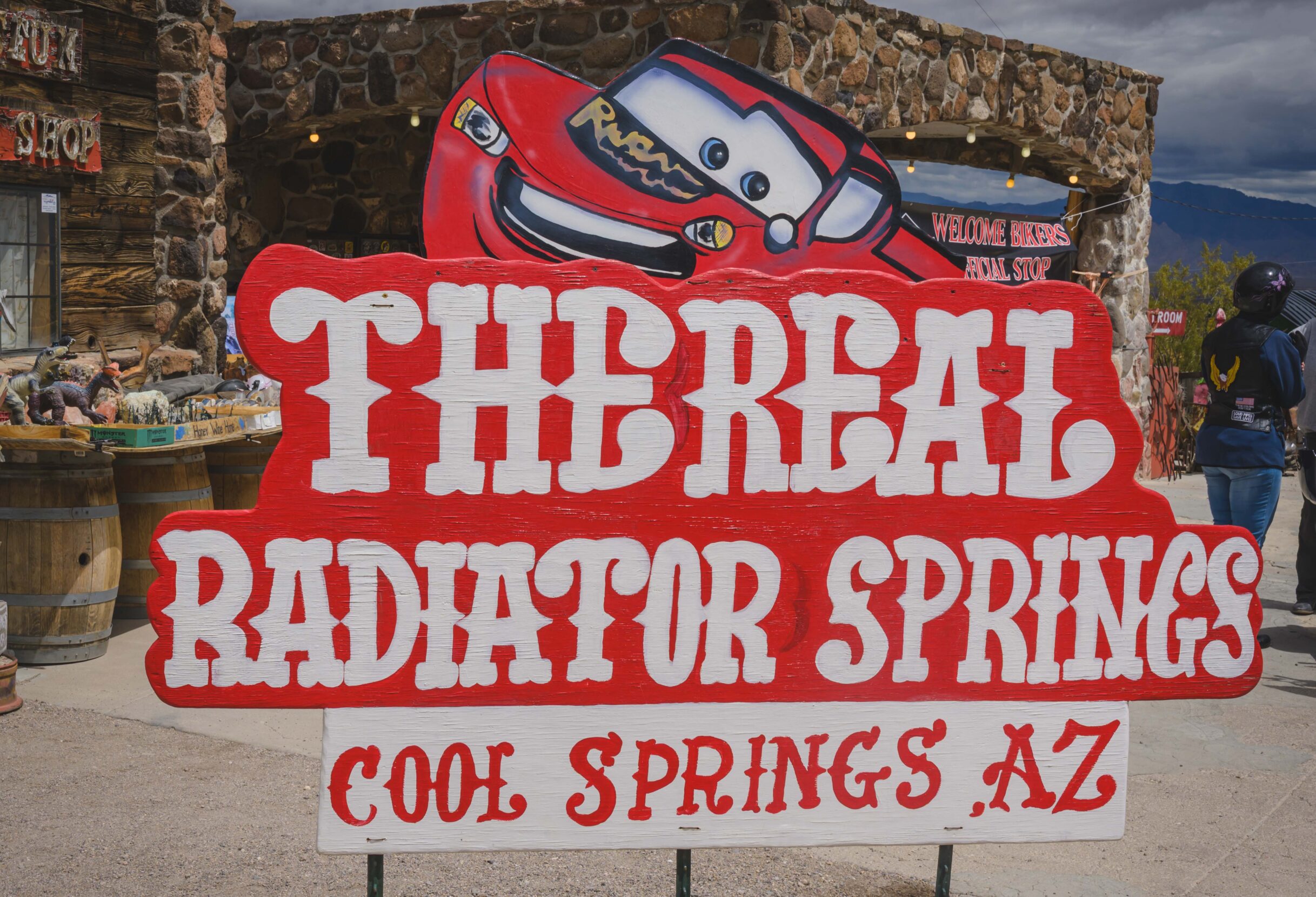
Lightning McQueen, the protagonist of the Pixar animated film, Cars, peeks over the edge of a sign in Cool Springs, Arizona, on Route 66. Photo: Jordan Ranft.
Route 66 lives in the national consciousness. Perhaps the most prominent recent story to cement the road in our culture is Disney and Pixar’s animated film, Cars. Cars tells the story of a bright red, likable-yet-egotistical race car named Lightning McQueen. After getting stranded in the small town of Radiator Springs on a section of Route 66 that has been bypassed by the interstate highway, he meets a cast of eclectic residents who make him stay long enough to clean up the catastrophic damage of his arrival.
There is a particularly iconic scene of Lightning gazing out from atop a butte over a sweeping desert vista, inspired by the landscapes of Arizona and New Mexico. It’s one of those movie moments that could easily feel saccharine and cliché, but instead somehow makes our hearts swell with the soundtrack as Lightning, noticing the interstate in the distance, proclaims, “They’re missing it!”
~~
In 2001, in a fleet of white Cadillacs, my dad, Joe Ranft, embarked on a trip down Route 66. As a lead storyboard artist for Pixar and the co-director of Cars, he traveled the road with a team from Pixar for the film’s research and development. The trip was helmed by Michael Wallis, a historian, author, and all-around ambassador for Route 66, whose 1990 book, Route 66: The Mother Road, is in large part responsible for the revival of tourism on the road after its decommissioning. They traveled from Tulsa, Oklahoma, to Los Angeles, California, interviewing denizens of the road along the way, visiting historical sites, and absorbing the energy of the route as they began to conceptualize the film’s story and characters.
A documentary feature included in the extras of the Cars DVD shows my dad and company on the route. Michael speaks to them with an almost shamanic authority through the bristles of an imperious mustache about the history and legacy of the road, as well as the spiritual significance of valuing the journey over the destination. My dad gets his hair cut by Angel Delgadillo, a barber from Seligman, Arizona, who fought for the historic preservation of Route 66 in the 1980s and has been dubbed the “guardian angel” of the road ever since.
In another segment, Michael and my dad are standing in a field at twilight, wind ruffling my dad’s hair as the camera zooms in on Michael. He urges my dad, “It’s alright to get lost. It’s alright to spend time, and stop, to do what you need to do.”
~~
Between 70 million and 80 million people will see it in theaters all over the world. But my dad won’t be one of them.
In August 2005, a year after our spring break road trip and a year before Cars premiered, my dad was in the passenger seat of his Honda Element, heading along California’s winding oceanside Highway 1 to a spiritual retreat in Mendocino. At a tight left curve, the driver lost control and swerved, pitching the car over a cliff, plummeting some 130 feet, rolling twice, and landing at the mouth of the Navarro River. Another passenger survived. The driver and my dad did not.
~~
On a Saturday morning in late April 2026, my wife and I take an early morning flight from our local airport to LAX, where we pick up our rental car and begin to slowly maneuver through LA traffic toward the Santa Monica Pier.
According to the online forums and guidebooks, the correct way to travel Route 66 is east to west, starting in Chicago and then moving diagonally across the country through Illinois, Missouri, Kansas, Oklahoma, Texas, New Mexico, Arizona, and finally across California to the edge of the Pacific Ocean. This method of travel mimics the path that many people took in the early and mid-20th century on the route while it was still a commissioned highway. Another popular move is for travelers to take the trip in vintage and classic cars. We’ll be driving west to east in a rented 2026 Toyota Camry Hybrid. Still, we are determined to check off the formal boxes of the trip wherever possible, so we pay $20 for parking at the pier and wade through the crowds to stand beneath the sign on the boardwalk that marks the end of Route 66.
As we wait in a queue of people hoping to take a picture under the sign, I look around at the crush of sunburned tourists and kitsch shops, and worry that I’m putting too much pressure on myself. What if I don’t feel anything? What if, at the end, I have nothing to say? Later, as we veer north out of San Bernardino and begin passing through the mountains that will lead us to Barstow and then, farther east, to the Mojave Desert, I begin to wonder what I truly am hoping to get out of this trip at all.
~~
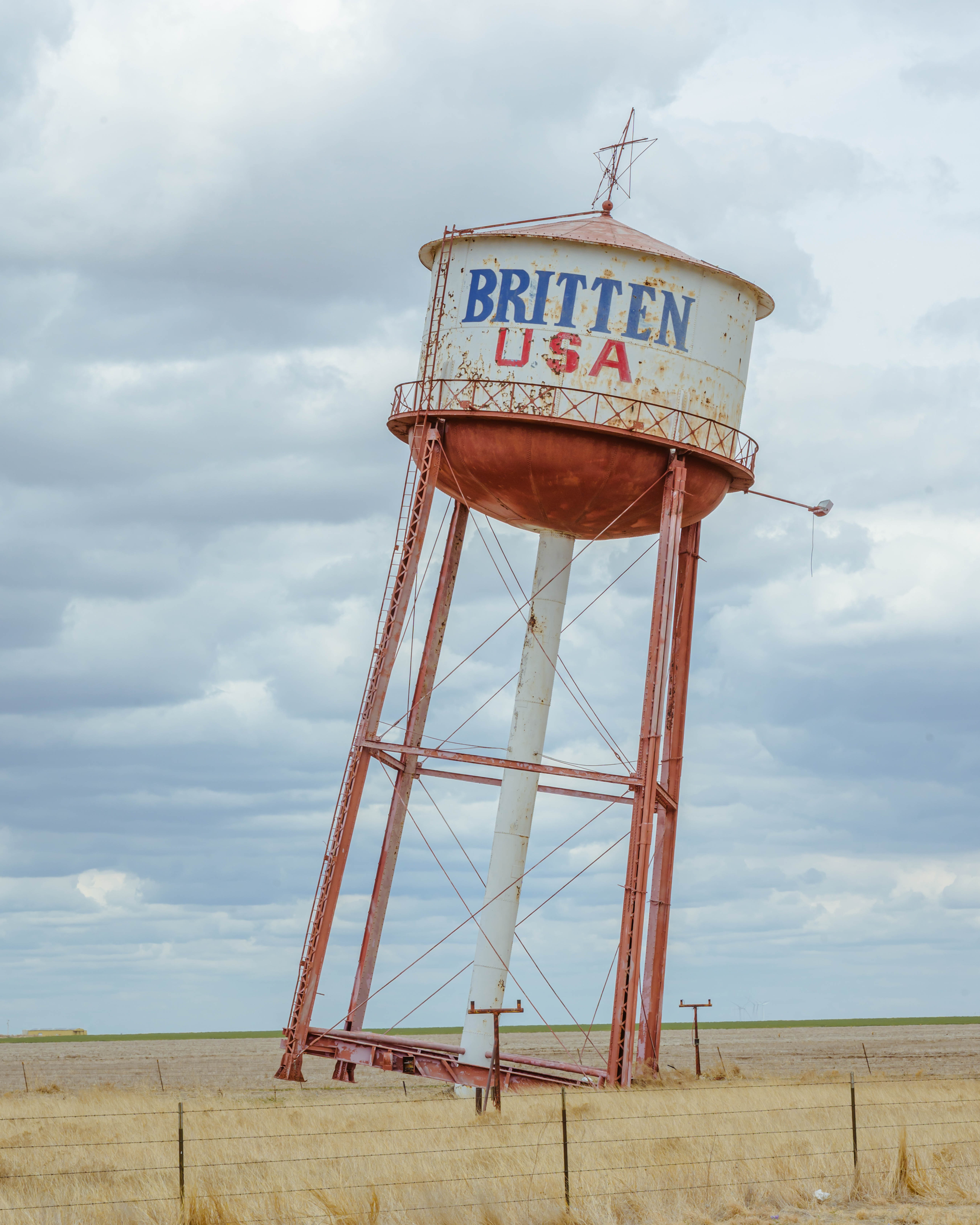
More than two decades after his father’s death, Jordan Ranft set out on Route 66 in search of something he couldn’t quite articulate. Photo: Jordan Ranft.
Commissioned in 1926 by the Federal-Aid Highway Act, Route 66 is the most famous highway in America, if not the world. As paved roads began to overtake rail travel in the American Southwest, a new wave of automotive tourism began to develop, and many viewed the regions the route crossed as the last bastion of the untamed West — replete with rugged landscapes, cowboys, and racist depictions of “exotic” Native populations.
During the Great Depression and Dust Bowl, many fled westward in search of brighter economic prospects, and this migration along Route 66 was canonized in works of the time, like John Steinbeck’s The Grapes of Wrath. Then, during World War II, the route became a primary artery for military transport. By the 1950s and 1960s, it was at the epicenter of a travel boom: The newly mobile middle class traveled leisurely with their families, stopping along the way at kitschy motels, roadside attractions, and service stations that vied for their patronage through increasingly outrageous decor. They would see main streets crowded with bright neon signs, themed motels in the shape of teepees and haciendas, and frivolous roadside attractions such as the world’s largest flip-flop. There was also a narrative of free-spirited bohemian travel, and the route became central to the hitchhiking narratives of musicians and Beat poets like Jack Kerouac.
From 1926 to 1985, an estimated 200 million vehicles traversed Route 66. But as President Dwight D. Eisenhower’s interstate highway system was built, the parallel sections of Route 66 saw traffic plummet. The road was decommissioned in 1985. Yet it persists — not just materially, but in the collective imagination of thousands of travelers from across the globe who elect to drive the route every year.
It is hard to pinpoint exactly why Route 66 has become more than the sum of its parts and taken on this mythic life. According to professor and historian Peter B. Dedek in his book Hip to the Trip, a historical account of Route 66, the road persists because it “symbolizes a sense of freedom and benign rebellion against the constrained routines of modern life, a place where one can wander and live in the moment.”
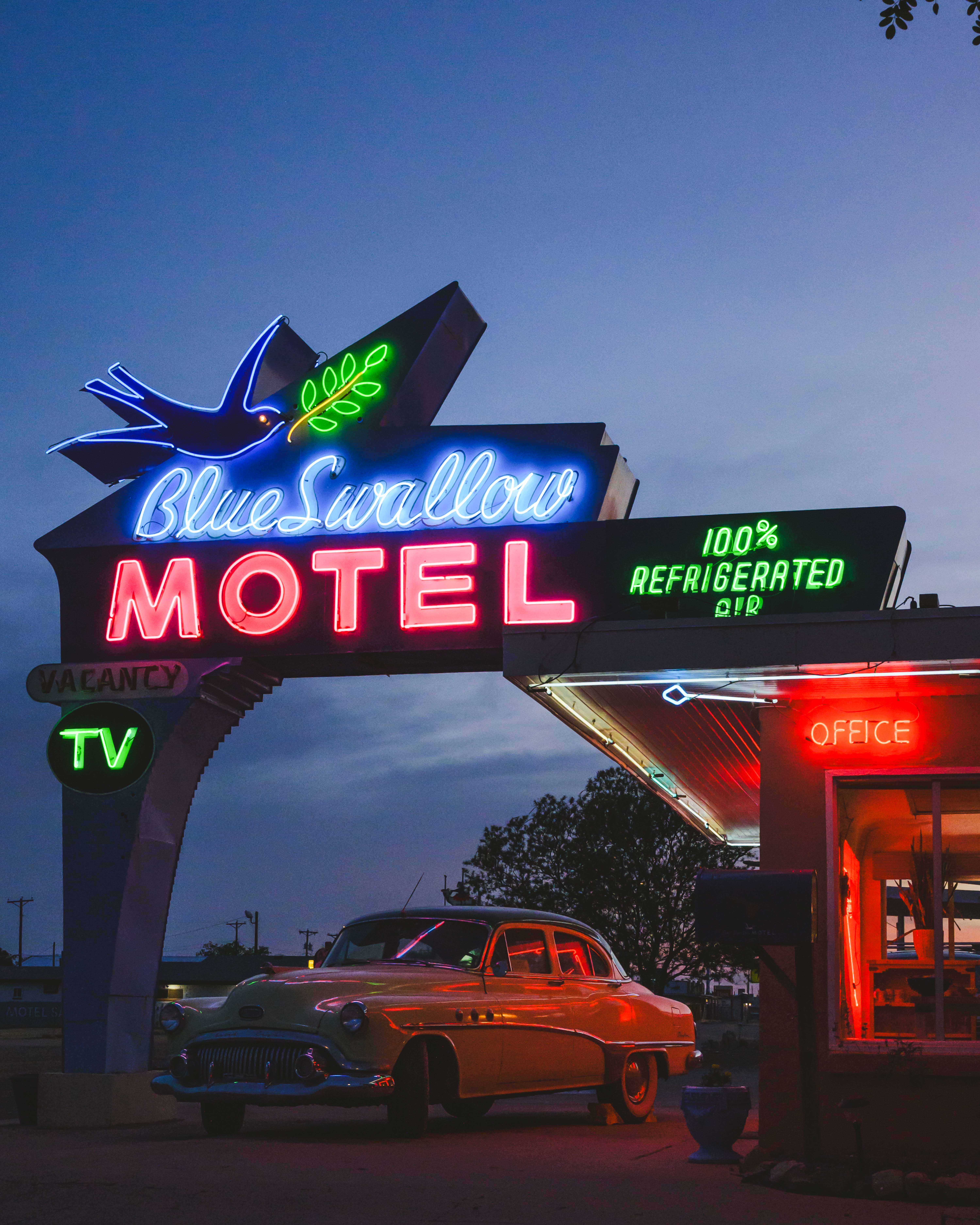
Neon signs — like those of the Blue Swallow Motel in New Mexico — have long been a colorful fixture along Route 66. Many of the route’s original signs have been restored or carefully maintained for decades. Photo: Jordan Ranft.
~~
Upon his return from the trip, my dad was different. A consummate workaholic as long as I had known him, which, admittedly, was only for nine years at that point, he began taking more time off from work. Road trips became more common in our family. He came into possession of an alarming number of Route 66-themed Hawaiian shirts. And he started eating a lot more beef jerky, which he referred to as “road scab.”
Every movie my dad worked on was significant to him, but the story of Cars, a film about a speed-obsessed race car learning the value of taking the scenic route, was life-altering in a philosophical sense. It changed him.
~~
I have previously driven across the country twice. Once from California to New York for graduate school, and then from New York back to California on the day I graduated. Each time, I took the interstate, and I don’t remember a single individual moment from those trips.
The point of interstate travel is to get somewhere as quickly as possible. The travel time between destinations is a sort of fugue-inducing liminal space. Drive, stop for gas, drive, stop for a quick bite at a fast-food restaurant, drive, check in at your hotel; rinse and repeat. There is a fundamental rejection of the environment in the design of these roads. Hills are blown through to make way for the most direct route; thick concrete barriers sit between the road and its surroundings; everything is leveled smooth and flat.
Driving Route 66 is a far more haptic experience. In western Arizona, the road splits off from the interstate toward a series of old mining towns. Sections of two-lane road bend around mounds and rocky outcrops, dip into washouts, and climb the small hills that endlessly populate the landscape like a swell of dirt waves. The road climbs into a section called the “Arizona Sidewinder,” a twisting eight-mile series of switchbacks that rise into the Black Mountains. There are no guardrails or barriers to separate me from the environment. The road demands my attention in a manner diametrically opposed to the passivity offered by the interstate.
“It’s alright to get lost. It’s alright to spend time, and stop, to do what you need to do.”
~~
On the morning of our second day, I wake up to pale sunlight leaking through a seam in the blackout curtains of our hotel room in Topock, Arizona, and step outside onto the fourth-floor balcony.
Laid out before me is a sweeping vista of the Colorado River, snaking lazily north into a distant bundle of mountains. Birds swoop down and break the glass skin of the water in search of fish. The bank opposite is densely packed with verdant brush and tall grass. From behind me, my wife excitedly exclaims that there are jet-ski rentals on the pier down below. Route 66, on which this hotel is situated, runs parallel to the river, curving and bending with its contours, embedded in the landscape. Interstate 40, on the other hand, is 650 feet away, on the other side of a hill, cutting its straight line east to west. I turn to my wife, who is still in bed, and, in a volume higher than the situation requires, declare, “They’re missing all of it!”
~~
Somewhere close to the Sidewinder’s zenith, we find a turnoff to a vista that looks out over areas of Arizona, California, and Nevada. The lookout is peppered with painted stones and crosses, memorials for loved ones. We pull a small sugar container wrapped in painter’s tape from the center console of the car, open it, and disperse a portion of my dad’s ashes.
~~
By the end of our second day, my wife and I begin to say to each other, with no irony, “We’re following the spirit of the road.” I realize this must be what my dad experienced. Him, on a research trip, falling through the barrier of analysis and into the realm of visceral experience. Me, on a trip to catch a glimpse of a ghost, falling just the same.
Maybe this is why people from around the world continue to drive the length of Route 66, because in the face of its decline as a means for mass transit, it adopted a new purpose. A man I’ll speak to down the road in Tucumcari, New Mexico, will say Route 66 is a living museum that stretches halfway across the country. I’ll add that it is also America’s longest meditation path.
Driving through Petrified Forest National Park, we come to the top of a hill and are met, almost aggressively, by a full panoramic view of the Painted Desert. The scene, with its hills and mesas in shades of pastels and melting popsicles, is too big to digest all at once. Suddenly, I am peering out over the blocky hood of a Lincoln Town Car at 12 years old, as Dad explains the various levers and buttons before us on the dashboard. He is in the passenger seat, telling me that this is how people used to see the country.
~~
In Stroud, Oklahoma, we make our way to the Rock Cafe, a tall building of rust-colored flagstone with a corrugated metal roof and a painted cutout of Lightning McQueen out front. In the lore of Cars, the Pixar team passed through town in 2001, ate a meal, and met the cafe’s owner, Dawn Welch, who appears in photos often wearing a sleeveless top, with dark brown hair, intelligent eyes, and a broad smile. When Dawn was 23, she traveled to Stroud to look at a grill that was for sale, hoping to buy it for a restaurant she was planning to open in Costa Rica. Charmed by the people and atmosphere of Stroud, Dawn never left. After meeting the Pixar team, she became the inspiration for Sally, the Porsche in Cars, a former hotshot lawyer who fell for the charm of the route.
Dawn is not at the restaurant today, and we are instead greeted by a waitstaff composed entirely of recent high school graduates. A pamphlet on the table explains that the kitchen uses the same cast-iron, flat-top stove it did when it first opened nearly a century ago. This explains why the heaping plate of eggs, sausage, and hash browns is as close to perfect as I think a breakfast has ever been.
At some point, I mention that my dad co-directed Cars and was on the original trip with Pixar that passed through Stroud in 2001. Our server, who was not yet born when my dad was here, excitedly points us to a far wall where a collection of Pixar-related artwork hangs. When I walk over to examine the works, I am met by a soot-covered T-shirt in a glass frame, salvaged from a structure fire at the Rock Cafe in 2008, with a drawing of Sulley from Monsters Inc. in Sharpie and my dad’s signature beneath it. On a shelf is a framed card with a drawing of Heimlich the caterpillar from A Bug’s Life, a character my dad voiced, and a note that reads, “Boy, do I love your fried pickle spears! — Joe Ranft.”

Framed on the wall of the Rock Cafe in Stroud, Oklahoma, is a t-shirt salvaged from a fire, with Joe Ranft’s signature. Photo: Jordan Ranft.
~~
There came a point during the past 20 years when my dad’s death transformed from a tragedy into fact. I’m not sure exactly when it happened, but one day, I noticed I no longer resisted the fact that he was dead. I often wonder how common this is for those of us who have lost loved ones, when enough time passes that the grief undergoes a sort of fossilization, and that clawing, burning feeling of cosmic injustice and loss is replaced by something cooler and more stable. I wonder, too, how many of us also experience the second iteration of grief, which arrives when we realize the first wave has passed. I don’t really grieve my dad’s death anymore, but 20-plus years later, I grieve the absence of my grief. I worry that the slow trickle of time has carried me further away from my dad’s memory than I am comfortable admitting.
So, as I look at his signature and drawings at the Rock Cafe, I am not flooded by loss. Instead, I feel electrified with excitement to have stumbled upon a tiny thread of his legacy.
~~
I worry that the term “magic” somehow damages my credibility, but it’s a word that crosses my mind at least once a day on this trip. We stop in Oatman, Arizona, and hand-feed wild burros — descendants of the pack animals brought in while it was still an active mining town — that roam freely in the streets. Driving through the Texas Panhandle and Western Oklahoma, we are surprised by the presence of red-brick Art Deco architecture, a holdover from President Franklin Delano Roosevelt’s New Deal and Public Works projects.
Everyone, everywhere, is happy to chat. We meet travelers from the U.K. and Taiwan. I speak to a man who spent 35 years as a funeral director in Minnesota and who, after the nightmare of COVID, completely upended his life to run a vintage motel in eastern New Mexico. We stop anywhere that looks interesting: gift shops with cryptic billboards of silhouetted rabbits, a restaurant that sits at the exact midpoint between Los Angeles and Chicago and serves a famous dish called “ugly pie,” ruins of hotels and gas stations.
I turn to my wife, who is still in bed, and, in a volume higher than the situation requires, declare, “They’re missing all of it!”
I can’t ask my dad if I’m getting any of this right. He exists, in some ways, in the same manner as Route 66: long desolate stretches punctuated by points of preserved memory. I’m not sure I can produce more than 20 distinctive memories of him. There are amalgams and double exposures of riding bikes and listening to Sheryl Crow and the Eagles in the car, and an embedded sense that I was always excited to see him, but the moments of narrative that we shared are, at this point, few and far between. It is vital to me, then, to continue preserving the distinctive memories of him that I still have, like the meticulously tended original neon signs hanging above these roadside motels.
~~
We arrive in Tulsa, Oklahoma, the last stop on our trip, around 1pm. After parking on a residential street, we walk into the lobby of the Sophian, a historic, Art Deco apartment building overlooking the Arkansas River, where Michael Wallis and his ever-strong mustache are waiting to greet us in the lobby.
At 80 years old, Michael moves slowly and with the aid of a cane, but remains sharp as a tack. He introduces us to his wife, Suzanne, and gives us a tour of their apartment, which is decorated from floor to ceiling with art and artifacts collected over decades of travel and historical research. I am especially excited to see signed portraits of Willie Nelson and Elvis. I am anxious to ask him as much as I can about my dad and the Pixar trip. Michael assures me we will get to that, but first, we have important business to attend to.
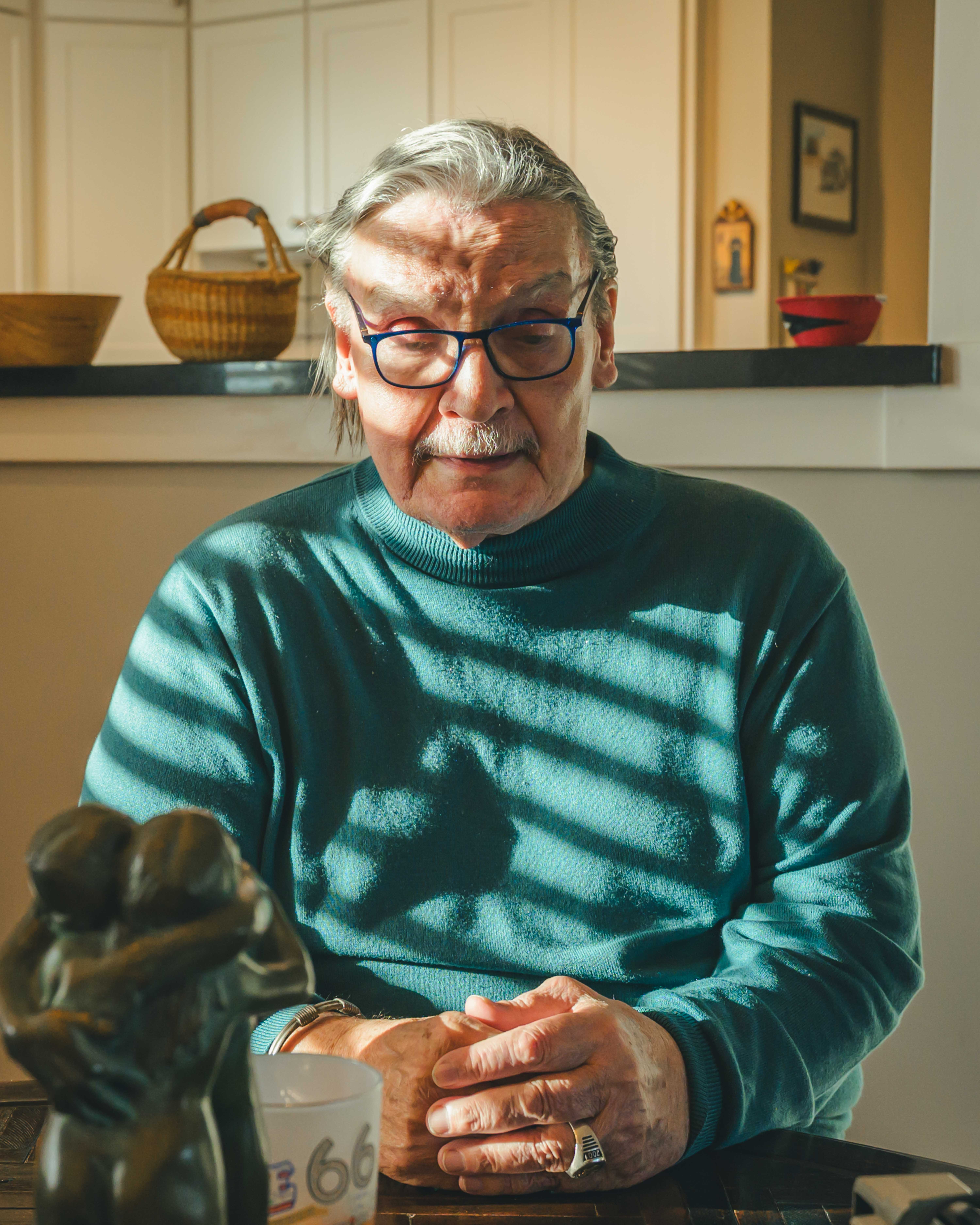
Historian and author Michael Wallis has championed Route 66 for decades. In 2001, he counseled the team from Pixar on their research trip down the route. He’s pictured, here, in his home in Tulsa, Oklahoma, during Jordan Ranft’s visit in 2026. Photo: Jordan Ranft.
The four of us drive to 11th Street, which Michael explains was the alignment for Route 66 before it was even adopted as a city street. The street is lined on both sides with Route 66 murals and restored neon signage that, even in the daytime, shines in greens, oranges, blues, and reds. We spend a majority of the afternoon touring Tulsa, soaking in its midcentury grandeur. Suzanne happens to be one of the foremost experts on Art Deco architecture in Tulsa, and she provides a story for each of the towering, ornate buildings that crowd the city’s downtown, citing the opulent competition between steel magnates and oil tycoons who wished to leave their mark. We eat at Baloney Maroney’s, a small barbecue restaurant that serves, as one could imagine, smoked bologna from a small red-and-white trailer in the parking lot of Buck Atom’s Cosmic Curios on 66. The eatery is operated by Michael’s nephew by marriage and has completely changed my mind on what the ceiling is for the deliciousness of bologna.
At one point, I turn to my wife and whisper, “Should we move to Tulsa?”
~~
Finally, Michael and I have time to talk. We sit in his dining room as late afternoon light slants through the blinds of the river-facing window. What was supposed to be a straightforward interview about my dad quickly morphs into a circuitous hour-and-a-half-long conversation about life. A self-professed storyteller, Michael knows a little bit about everything. Every time a new topic of conversation arises, from Bolshevism to Tulsa blues-rock, we take a detour into a memory or anecdote.
During our conversation, three important bits of information are revealed. First, Michael tells me that, on the trip, “I can’t recall a time where your dad wasn’t smiling.” Second, after Cars was released, he says, businesses along the route experienced a 30% increase in visitors and sales. Finally, Michael explains that Tulsa is not our last stop. We have one more place to go.
~~
Route 66 passes through Kansas for only about 13 miles, which helps explain why it was the first state to fully pave its section of the road in the 1920s. Michael has insisted that we make our way farther east, to a cafe and souvenir shop called Cars on the Route. The shop resides in an old service station with a garage that has been converted into a retro diner space, with refurbished, mustard-colored gas pumps out front. Michael connects us with Renee Charles, the co-owner and operator of Cars on the Route, who graciously meets us at the store, alongside her husband, Billy Joe, and business partner, Brian Jordan.
Renee greets us on a Sunday morning just after 9 a.m., wearing jeans, a hoodie, and comfy-looking sneakers. The station is supposed to be closed today, but she has come to talk to us anyway, excitedly leading us around the site. As she explains that the shop and cafe bring in travelers from around the world, four people promptly prove her point by walking in and proclaiming they have come from Brazil. I ask her how common this is. “Daily,” she says.
She then tells me how Galena, Kansas, used to be a rather desolate place and how this tourist stop, which has expanded beyond the rest stop to include a replica of Luigi’s Tire Store from Cars as well as a drive-through archway painted with sunflowers before a purple sunset, was a linchpin in a long process of revitalization for the area.
“I’m convinced,” she says, “that your dad and that movie saved this place.”
~~
There is a picture of my dad standing in a lot in Galena, staring pensively at an old, rusty tow truck. This truck became the inspiration for the lovable and widely recognized Tow Mater, whose goofy and genuine friendship with Lightning McQueen is at the heart of the Cars franchise.
Throughout my life, in talking with people my dad worked with, I have been told repeatedly that Tow Mater is an essential representation of who my dad was: excitable, kind, generous, and a bit mischievous.
Since my dad’s visit, the original truck has been brought around to the front of the building and outfitted with large eyes on its windshield. It is accompanied by another tow truck and a fire truck made to look like the Cars character Red, for whom my dad did some preliminary voice work before he died. In front of this exhibit is a plaque featuring the same picture of my dad considering the truck and a commemorative summary of his visit.
He is in the passenger seat, telling me that this is how people used to see the country.
I didn’t know what I was looking for, but I didn’t expect a tangible shrine to my dead father’s legacy. Yet here it is, in Galena of all places.
~~
I am struck, looking at this plaque, by a memory, one of the few clear memories I have from the weeks after Dad’s death. At one of his memorial services — he was well-loved enough to have two — I remember looking at the back of the program and seeing a photo of him hiking up the leg of his shorts to reveal a broad, pale thigh, standing in the doorway of a nondescript building somewhere on the route below a cursive inscription that reads, “The journey is the reward.”
My dad received a gift from Route 66 and then, even after he died, managed to give something back through the film he helped create. This permeability, the exchange of energy and boon, is probably the point, and here I am, participating without even knowing. As gone as he may be, and as cliché as it is to say, part of my dad persists, just like Route 66 itself, and they will continue to live on as long as someone, somewhere, is willing to tell their story.
I take the remainder of his ashes, which we have been scattering along the trip whenever and wherever it felt right, and deposit them at the base of the tow truck. The wind quickly disperses the pile across the pavement and picks them up into the air, carrying them toward the cracked, two-lane highway of Route 66. I give Dad back to the road and wonder what will happen next.
Then, I think of something Michael says, a neologism he uses to sign off on many of our phone calls: “Remember, life begins at the off-ramp.”
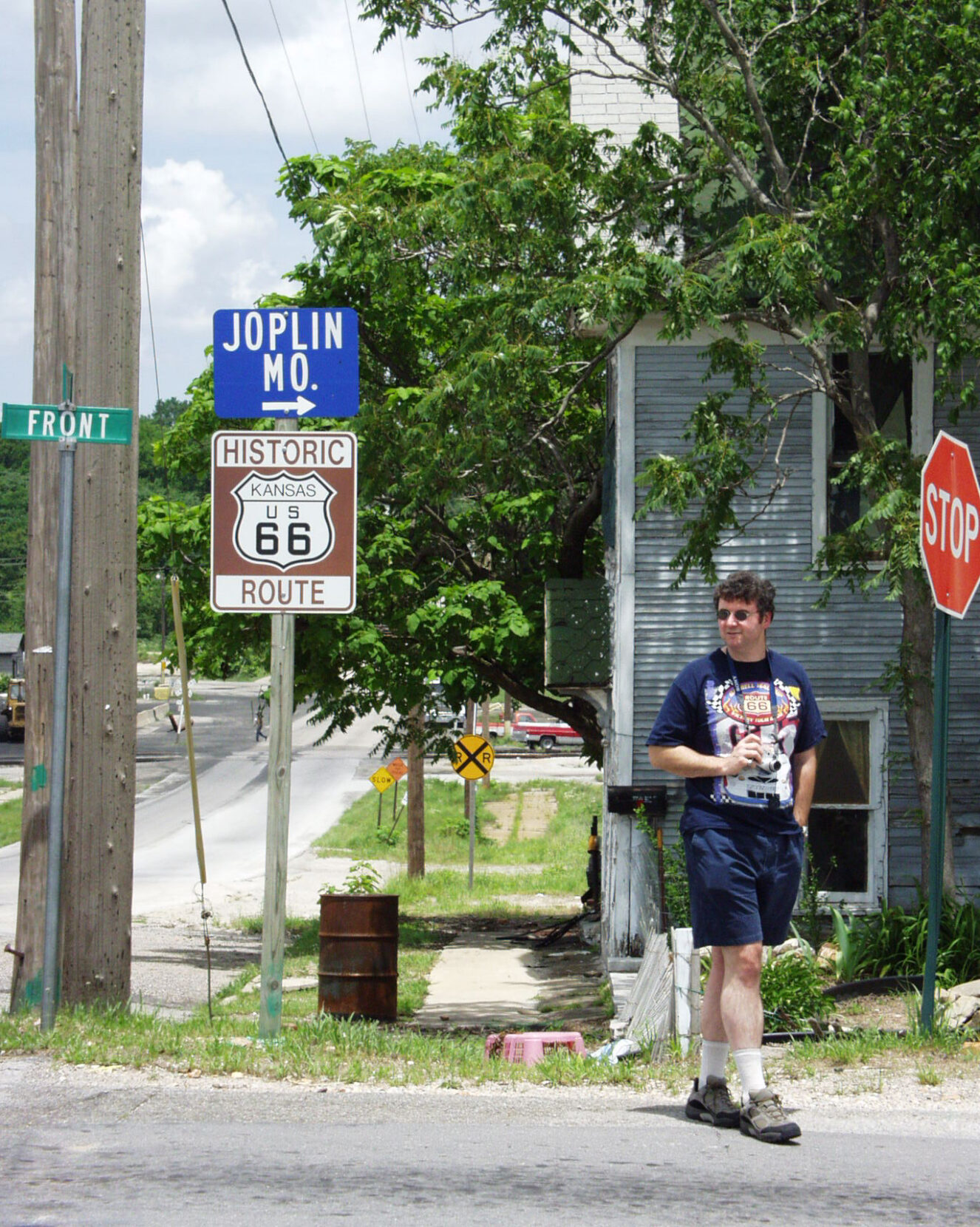
Storyboard artist, director, and father Joe Ranft pauses to take in his surroundings on Route 66. Photo: Courtesy of Jordan Ranft.
Jordan Ranft
Jordan Ranft is a therapist and writer based in Northern California who writes about arts, culture, the environment, and the strange and oftentimes unnerving intersection between societal artifice and the natural world.